Connecting Cape Town: Inside South Africa’s TV white spaces experiment

In 2011, a United Nations commission came to a powerful conclusion: access to broadband internet is a basic human right, matched by the likes of housing, sustenance and healthcare. Arguments can be made that widespread access has transformed entire economies while kick-starting others, with Finland even going so far as to command its ISPs to provide 1 Mbps connections to all homes regardless of location. Both the United States and the United Kingdom have similarly ambitious plans, and all three of these countries have one particular catalyst in common: funds.

The harsh reality, however, is the economies that stand to gain the most from sweeping internet adoption are also the least equipped to enable it. In early 2010, the European Bank estimated that a project to roll out passive optical fiber to 33 cities in the Netherlands would cost nearly €290 million. The mission driving such funding? “To stimulate innovation and keep Europe at the forefront of internet usage.” It’s the answer to a problem that could undoubtedly be categorized as “first world,” but consider this: Internet World Stats found that 92.9 percent of Holland’s population routinely used the world wide web in 2012. Let’s just say it’s easier to invest in an initiative that you’re certain nearly 9 in 10 citizens will use.

via Connecting Cape Town: Inside South Africa’s TV white spaces experiment.

Posted in Interesting, Tech | Leave a comment

Skype for Outlook.com preview now available in the US

Americans waiting for the Skype for Outlook.com preview can stop twiddling their thumbs — the test release is now available in the US, complementing existing access in Brazil, Canada, France, Germany and the UK. As in other countries, stateside users with merged Outlook.com and Skype accounts just have to install a plugin for Chrome, Firefox or Internet Explorer to make calls while checking email. Those in other regions will have to sit tight, however; Microsoft only promises worldwide access to Skype for Outlook.com sometime in the “near future.”

via Skype for Outlook.com preview now available in the US.

Posted in Interesting, MSFT | Leave a comment

ASCE President’s Note, Civil Engineering magazine, Jul/Aug 2013

Mahatma Gandhi once said, “The future depends on what you do today.” Preparation for the future was the impetus behind The Vision for Civil Engineering in 2025, a report that ASCE developed to answer two questions: what will the world be like in the coming decades, and what role will civil engineers need to play in tomorrow’s world for society to reach its potential?

http://www.asce.org/PPLContentWide.aspx?id=23622327306

Leave a comment

Regenerated human heart tissue beats on its own, leads towards replacement hearts and other organs

Extremetech.com
Regenerated human heart tissue beats on its own, leads towards replacement hearts and other organs
http://www.extremetech.com/extreme/163889-regenerated-human-heart-tissue-beats-on-its-own-leads-towards-replacement-hearts-and-other-organs

Leave a comment

These Glow in the Dark Rabbits Will Help Cure Diseases One Day

Glowing bunny rabbits aren’t just for Sherlock Holmes reboots and acid trips anymore. Scientists from the University of Hawaii recently collaborated with a team from Istanbul, Turkey, where a couple of bright green lab rabbits were just born as part of a larger effort to better understand hereditary illness and make cheaper medicine. Also: Glow-in-the-dark bunnies!

This isn’t some inhumane magic trick. The rabbits are part of a genetic manipulation experiment, one that the researchers hope will shed some light on hereditary diseases and hopefully lead the way to producing drugs to help cure them. The embryos of the two green rabbits were injected with a fluorescent protein from jellyfish DNA, giving them the “glowing gene” that makes them green under a blacklight. The glowing effect is just to show that the genetic manipulation technique works, and in future experiments, researchers could inject beneficial DNA into the rabbits so that they might be used to produce medicine.

via These Glow in the Dark Rabbits Will Help Cure Diseases One Day.

Posted in Interesting, Science | Leave a comment

Future finally arrives as Martin Jetpack approved for manned test-flights

Every morning, we wake up knowing that the writers of the ’60s, who promised us pill-sized meals and flying cars by the year 2000, had lied to us. But now, a New Zealand-based avionics company has been granted permission to start manned test-flights on the ultimate piece of retro-futurism: the jetpack. The Martin Jetpack, which successfully carried a dummy 5,000 feet above sea level in 2011, has been given a test license by New Zealand’s Civil Aviation Authority — and inventor Glenn Martin is hopeful that a military version of the device will be ready next year. After that, the ambitious engineer plans to release a general-purpose edition in 2015 and although the price has skyrocketed from $86,000 to around the $200,000 mark, we’d probably pay double that amount just to re-enact that moment from Thunderball.

Click link below to see video,

via Future finally arrives as Martin Jetpack approved for manned test-flights.

Posted in Interesting, Science, Tech | Leave a comment

Microsoft confirms Windows 8.1 launching October 17th

Microsoft has announced that Windows 8.1 will be arriving on October 17th well, in the US, anyway, confirming an earlier rumor of a mid-month launch. For some reason, the companys specified an exact release time of 12am on October 18th in New Zealand, which is 4am PT or 7am ET on October 17th. At that time, the free update will begin rolling out across local Windows Stores, and will be available “at retail and on new devices” from the 18th onwards, depending on your region. Check out our hands-on and subsequent coverage for an idea of what to expect from the update.

via Microsoft confirms Windows 8.1 launching October 17th.

Posted in Interesting, MSFT, WIN8 | Leave a comment

Scientists Just Grew Human Heart Tissue That Beats With Total Autonomy

Coming fresh on the heels of the news that scientists are successfully 3D printing live, working, mini human kidneys, a new report in Nature is giving another burst of hope to the future of organ transplants. For the very first time, a research team has been able to grow human heart tissue that beats totally autonomously in its petri dish home.

The tissue itself came from induced pluripotent stem cells (iPSCs), which started as mature human skin cells and effectively “reprogrammed” back to an embryonic state and then coaxed into becoming the desired cell, in this case those with the potential to become heart tissue or multipotential cardiovascular progenitor (MCP) cells. This is the same method that scientists recently used for the far less practical, far more nausea-inducing feat of growing human teeth from urine.

Then using a decellularized mouse heart (which is basically exactly what it sounds like—a mouse heart stripped of all its cells, leaving behind a heart framework or “scaffold”), the researchers repopulated the heart scaffold with the MCP cells.

via Scientists Just Grew Human Heart Tissue That Beats With Total Autonomy.

Posted in Breaking News, Interesting, Science | Leave a comment

Of Course Florida Might Deploy Drones To Combat Mosquitoes

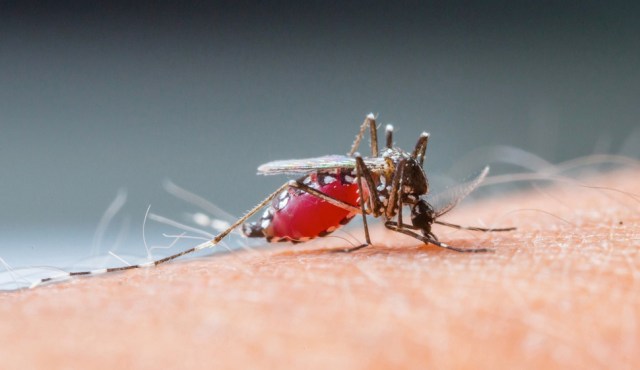
Take any completely outlandish idea and put the word Florida in the same sentence and all of a sudden it makes a lot more sense. The state, known for its roaming gangs of blood-sucking mosquitoes, is hoping to take to the skies to help battle the menace by using camera-equipped drones to spot shallow pools of water where the insects breed and reproduce.This month members of the Florida Keys Mosquito Control District will be testing the plausibility of using a hawk-like drone equipped with an infrared camera to spot areas where standing water is probably serving as a high-output nursery for mosquitoes. Since the drone can stay aloft for up to 90 minutes it will be used to locate and geotag hotspots up and down the state that can be later treated with larvicide, wiping out mosquitoes before they mature and become a flying menace.Of course drones dont come cheap, but an autonomous vehicle that can fly low enough to the ground to be an effective spotter is still considerably more affordable in the long run than a human-piloted aircraft. But hey, given who were dealing with, maybe we should just be glad theyre not napalming the whole state with pesticide. [KeysNet via IEEE Spectrum]

via Of Course Florida Might Deploy Drones To Combat Mosquitoes.

Posted in Breaking News, Interesting | Leave a comment

Scientists Have Created a Malaria Vaccine Thats 100% Effective

For the first time in history, scientists have completed successful human trials of a malaria vaccine that provides 100% protection against the often fatal disease.Currently, we have no truly effective method of protecting against malaria. Even the World Health Organization had only set their sights on a vaccine with an 80% efficacy rate—and they werent planning to have that until 2025. Because before today, according to Anthony Fauci, director of the US National Institute of Allergy and Infectious Diseases in Bethesda, Maryland, “we have not even gotten anywhere near that level of efficacy.” But this newest incarnation has surpassed everything we thought possible.Called PfSPZ, the vaccine is made from weakened sporozoites SPZ, the form of the malarial parasite Plasmodium falciparum Pf when its in its initial infectious state. Even though the parasite is weakened, its in its whole form, thus invoking an immune response. The six human subjects that were given five intravenous doses of PfSPZ were 100% protected when they were later bitten by infectious mosquitoes—five of the six unvaccinated control participants and three of the nine people only given four doses went on to develop malaria.Previously, most of the malaria vaccines being experimented with only used a few of the parasites proteins. Stephen Hoffman, head of the Maryland developing firm Sanaria, decided to test a vaccine using the whole sporozoite after researching past experiments going back to the 1970s in which strong, long-lived protection from malaria resulted from volunteers being exposed to thousands of bites from irradiated infected mosquitoes. Stefan Kappe, a malaria researcher at the Seattle Biomedical Research Institute in Washington, tells Nature:

via Scientists Have Created a Malaria Vaccine Thats 100% Effective.

Posted in Breaking News, Interesting, Science | Leave a comment